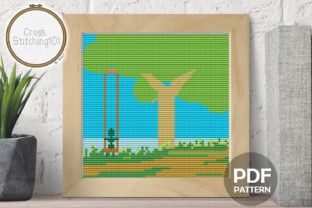
Landscape with Tree Swing Cross Stitch
Landscape with Tree Swing Cross Stitch is more than a creative hobby—it’s a strategic tool for visual thinking, planning, and intentional design. Whether you're an entrepreneur, educator, or creative professional, this cross stitch pattern offers a unique way to engage with ideas, structure thoughts, and bring abstract concepts into tangible form. By combining artistry with structured design, Landscape with Tree Swing Cross Stitch supports decision-making, creativity, and long-term goal alignment in a way that feels both fulfilling and purposeful.
The Strategic Value of Visual Design in Planning
Visual tools like Landscape with Tree Swing Cross Stitch are not just for aesthetic satisfaction—they serve as cognitive frameworks. When you engage in cross stitch, you’re essentially creating a visual map of your ideas. This process mirrors the way professionals plan projects, strategize business moves, or design learning experiences. The act of stitching each symbol into place reinforces focus and attention to detail, which are critical skills in any strategic endeavor.
Consider how Landscape with Tree Swing Cross Stitch can support your goals. If you're working on a marketing campaign, for instance, you might use the tree swing as a metaphor for engagement—how users interact with your brand, how they "swing" between different touchpoints, and how you can create a more immersive experience. The landscape itself becomes a canvas for mapping out customer journeys, brand positioning, or even digital layouts.
How to Approach Landscape with Tree Swing Cross Stitch Intentionally
To get the most out of Landscape with Tree Swing Cross Stitch, it's important to approach it with clarity and purpose. Start by defining what you want to achieve through this activity. Are you looking to enhance your creative process? Improve focus during brainstorming sessions? Or simply find a relaxing way to visualize your goals?
Once you have a clear objective, consider how the elements of the pattern align with your needs. The tree swing, for example, can represent a pivotal moment in a project—a turning point, a key decision, or a breakthrough. The surrounding landscape offers space for additional symbols, notes, or visual cues that can help you think through complex problems.
Using the three versions of the pattern—color blocks, color symbols, and black-and-white symbols—can also guide your approach. Color blocks are ideal for quick visualization and mood setting, while color symbols allow for more detailed planning. Black-and-white symbols offer a minimalist approach that can be useful for focusing on structure without distraction.
Practical Use Cases for Landscape with Tree Swing Cross Stitch
- Business Strategy: Use Landscape with Tree Swing Cross Stitch to map out your company's vision, mission, and core values. The tree swing can represent innovation or growth, while the landscape can depict your market, competition, and customer base.
- Education and Learning: Teachers and educators can incorporate this pattern into lesson plans to help students visualize concepts. The tree swing could symbolize a learning milestone, and the landscape can represent the broader curriculum or educational journey.
- Creative Projects: For designers, writers, or artists, Landscape with Tree Swing Cross Stitch can serve as a source of inspiration. It encourages a meditative state that fosters new ideas and connections between seemingly unrelated concepts.
- Personal Development: Individuals can use this pattern as a tool for self-reflection. The tree swing might represent a personal goal, while the landscape reflects the steps needed to reach it.
Why Clear Goals Matter in Using Landscape with Tree Swing Cross Stitch
Without clear goals, Landscape with Tree Swing Cross Stitch can become a random exercise in creativity. While this may be enjoyable, it doesn't necessarily lead to meaningful outcomes. To ensure that your cross stitch work contributes to your larger objectives, it's essential to define what you hope to gain from the process.
For example, if you're using Landscape with Tree Swing Cross Stitch as part of a branding strategy, you should have a clear understanding of what aspects of your brand you want to highlight. The tree swing could represent your brand's unique selling proposition, while the landscape might showcase your target audience or market position.
Similarly, if you're using it for personal development, set specific milestones. How will this activity help you grow? What insights do you hope to gain? Answering these questions ensures that your cross stitch work is not just an artistic endeavor but a strategic one.
Strategic Observations for Effective Use
- Start Small: Begin with a section of the pattern that resonates with your current goals. This helps maintain focus and prevents overwhelm.
- Use Symbolism: Assign meaning to the elements of the pattern. The tree swing can represent a key action, while the surrounding landscape can reflect your environment or resources.
- Track Progress: Keep a journal or log alongside your cross stitch work. Note how the process influences your thinking, problem-solving, or creative output.
- Reflect Regularly: Set aside time to review your progress. Ask yourself how the pattern has helped you clarify your goals or refine your strategies.
Risks of Using Landscape with Tree Swing Cross Stitch Without Context
While Landscape with Tree Swing Cross Stitch can be incredibly beneficial, there are risks associated with using it without clear context or goals. One common issue is the potential for distraction. Without a defined purpose, the activity can become a time sink, leading to frustration rather than fulfillment.
Another risk is the lack of alignment with broader objectives. If you're using Landscape with Tree Swing Cross Stitch as part of a larger project, it's important to ensure that the symbols and patterns you choose support your overall strategy. Otherwise, the work may feel disconnected and unproductive.
Additionally, over-reliance on visual tools without complementary strategies can limit their effectiveness. Landscape with Tree Swing Cross Stitch is best used in conjunction with other planning methods, such as goal-setting frameworks, SWOT analysis, or mind mapping.
How to Use Landscape with Tree Swing Cross Stitch Intentionally
Conclusion: Making the Most of Landscape with Tree Swing Cross Stitch
Landscape with Tree Swing Cross Stitch is a versatile and powerful tool when used intentionally. By aligning the pattern with your strategic goals, you can transform it from a simple craft into a meaningful resource for planning, creativity, and decision-making. Whether you're an entrepreneur, educator, or creative professional, this cross stitch pattern offers a unique way to engage with your ideas and bring them to life in a structured, thoughtful manner.
Remember, the key to success lies in clarity, purpose, and consistent application. With the right mindset and approach, Landscape with Tree Swing Cross Stitch can become an essential part of your toolkit for achieving better results and making more informed decisions.