Seamless Repeating Linear Pattern: A Practical Guide to Understanding and Applying It
The seamless repeating linear pattern is a design element that has gained significant traction in both digital and physical design fields. This pattern type is characterized by its ability to repeat continuously without visible seams or breaks, creating a cohesive and uninterrupted visual flow. Unlike traditional patterns that may require careful alignment or tiling, the seamless repeating linear pattern offers a more intuitive and efficient approach to design.
What Makes Seamless Repeating Linear Pattern Unique?
A seamless repeating linear pattern is built on a one-dimensional structure, typically extending infinitely in one direction. This makes it particularly useful for applications where a continuous line of design elements is needed, such as in backgrounds, borders, or decorative accents. The key feature of this pattern is its ability to repeat seamlessly, meaning that when you reach the end of the pattern segment, it continues from the beginning without any disruption.
This kind of pattern is often created using vector graphics software, which allows for precise control over shapes, colors, and spacing. Designers can create a single unit of the pattern and then replicate it across the desired space, ensuring consistency and uniformity throughout the design.
How Does It Compare to Other Patterns?
While there are several types of repeating patterns, the seamless repeating linear pattern stands out due to its simplicity and efficiency. Let's compare it with some common alternatives:
- Non-seamless repeating patterns: These patterns may have visible seams when tiled, requiring additional effort to align and adjust. They are less suitable for large-scale designs where continuity is essential.
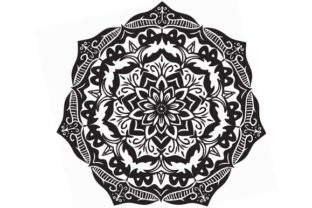
- Radial patterns: These patterns radiate outward from a central point and are ideal for circular or symmetrical designs. However, they do not offer the same linear continuity as seamless repeating linear patterns.
- Freeform patterns: These are non-repeating and often used for unique, one-off designs. While they offer greater flexibility, they lack the scalability and consistency of seamless repeating linear patterns.
The seamless repeating linear pattern is particularly well-suited for projects that require a consistent, unbroken visual line. It is commonly used in web design, interior decoration, textile printing, and architectural visualization.
Strengths and Limitations of Seamless Repeating Linear Patterns
One of the primary strengths of seamless repeating linear patterns is their adaptability. They can be applied to a wide range of surfaces and materials, making them versatile for different design needs. Additionally, their simplicity allows for easy customization and modification, which is especially valuable in iterative design processes.
However, like any design technique, seamless repeating linear patterns have limitations. For instance, they may not be suitable for complex or highly detailed designs that require multiple layers or intricate shapes. In such cases, a more sophisticated pattern type might be necessary.
Another limitation is that the repetitive nature of these patterns can sometimes lead to a sense of monotony if not carefully designed. To avoid this, designers should focus on varying the elements within the pattern segment while maintaining the seamless repetition.
When Is the Seamless Repeating Linear Pattern the Right Choice?
The seamless repeating linear pattern is an excellent choice for a variety of applications. Here are some scenarios where it shines:
- Web design: For background textures, navigation bars, or decorative borders that need to extend across the entire page without interruption.
- Interior design: For wall coverings, floor tiles, or furniture accents that require a continuous visual effect.
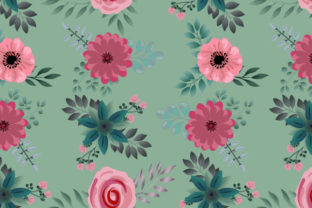
- Textile design: For fabric prints, wallpaper, or other materials where a repeating pattern is essential for production.
- Architectural visualization: For creating realistic textures and finishes in 3D models or renderings.
In each of these cases, the seamless nature of the pattern ensures that the design remains visually cohesive and professional-looking, even when extended over large areas.
Alternatives and Best-Fit Situations
While the seamless repeating linear pattern is a powerful tool, it is not always the best fit for every project. Consider the following alternatives based on your specific needs:
- Grid-based patterns: Ideal for designs that require structured alignment and symmetry, such as data visualizations or grid layouts.
- Organic patterns: Suitable for more natural, flowing designs that do not rely on strict repetition.
- Custom patterns: For unique, one-of-a-kind designs that cannot be easily replicated through standard pattern techniques.
Choosing the right pattern depends on the project’s goals, the intended audience, and the medium in which it will be used. By understanding the strengths and limitations of different pattern types, designers can make informed decisions that enhance the overall effectiveness of their work.
Practical Examples and Comparisons
To better understand how the seamless repeating linear pattern works in practice, consider the following examples:
Example 1: Web Background Texture
A designer creates a subtle geometric pattern using a seamless repeating linear pattern. This pattern is applied as a background texture for a website, providing a clean and modern look that extends across the entire page without any visible seams.
Example 2: Interior Wall Accent
An interior designer uses a seamless repeating linear pattern to create a decorative border for a living room wall. The pattern consists of alternating shapes and colors, offering visual interest while maintaining a cohesive design.
Example 3: Textile Print
A fashion designer develops a seamless repeating linear pattern for a fabric print. The pattern features a series of abstract shapes that repeat along the length of the fabric, allowing for endless application in clothing and home décor.
Each of these examples demonstrates how the seamless repeating linear pattern can be tailored to suit different design requirements, whether it’s for digital or physical media.
Making an Informed Decision
Ultimately, the decision to use a seamless repeating linear pattern depends on the specific needs of the project. It is important to evaluate factors such as design complexity, scalability, and the desired visual effect. By considering these aspects, designers can determine whether this pattern type is the most appropriate choice or if another alternative would better serve their objectives.
For those looking to explore further, experimenting with different pattern segments and testing them in various contexts can provide valuable insights into their performance and versatility. With the right tools and techniques, the seamless repeating linear pattern can be a powerful asset in any design toolkit.